Concrete Connections: Why the Presence—or Absence—of Sidewalks Quietly Determines a Street's Destiny
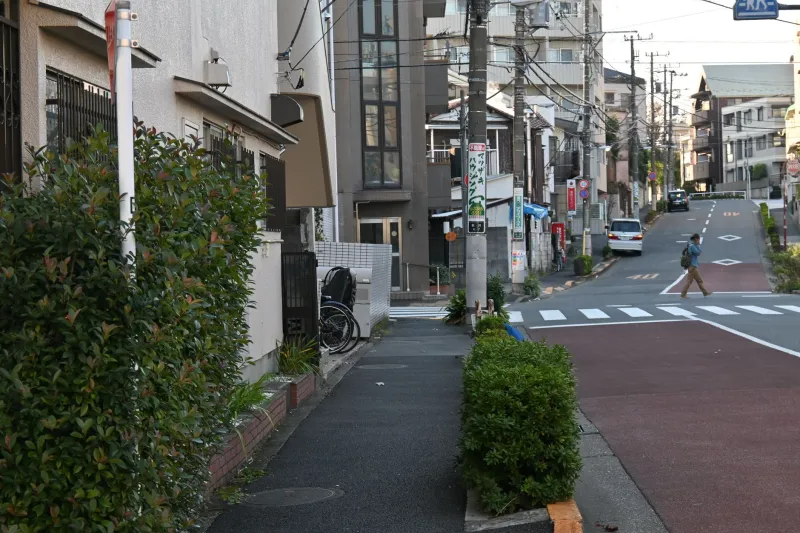
When prospective buyers walk a block for the first time, attention tends to cluster around curb appeal, landscaping, and the architectural details of the home itself. The sidewalk—if one exists—is treated as background infrastructure, something to be stepped over rather than evaluated. That oversight is costly. The pedestrian path running along a residential street is, in many ways, the nervous system of neighborhood life, and its quality, continuity, and design communicate a great deal about what kind of community a street is becoming and whether it will hold its value over the long term.
At 124 Cline Avenue, we believe that understanding a home means understanding its surroundings in full—not just the square footage indoors but the social and physical infrastructure that determines how a street functions. Sidewalks sit at the center of that analysis.
The Difference Between a Street and a Community
There is a meaningful distinction, often invisible in real estate listings, between a street that happens to contain houses and a street that functions as a genuine community. The physical design of the public right-of-way largely determines which category any given block falls into. Streets without sidewalks—or with narrow, broken, or discontinuous ones—force pedestrians into the roadway or onto private lawns. The implicit message is that this space belongs to vehicles, not people. Residents respond accordingly: they stay inside, they drive rather than walk, and they interact with neighbors far less frequently.
The consequences compound over time. Research from urban planning literature consistently demonstrates that neighborhoods with well-maintained, continuous sidewalk networks exhibit higher rates of informal social interaction—the kind of spontaneous conversation between neighbors that builds trust, raises collective safety awareness, and creates the social fabric that makes a block feel like a place worth protecting. Streets that lack this infrastructure tend toward social fragmentation, not because their residents are less inclined toward community, but because the physical environment never creates the conditions for it.
What the Data Reveals About Pedestrian Infrastructure and Property Value
The relationship between walkability and home values is no longer a matter of anecdotal observation. Walk Score, a metric that quantifies pedestrian access to amenities and evaluates the quality of the walking environment, has been incorporated into mainstream real estate analysis precisely because its correlation with sale prices is measurable and consistent. Studies conducted across multiple metropolitan areas have found that a one-point increase in Walk Score corresponds to property value increases ranging from several hundred to several thousand dollars, depending on the market. In urban and near-suburban contexts, the premium for walkable streets can reach five to ten percent of total home value.
But the sidewalk's contribution to this figure is not merely about access to coffee shops or transit stops. The condition and continuity of the pedestrian pathway itself signals something to the market about how a neighborhood is managed and valued. Cracked, uneven, or missing sidewalk panels communicate deferred maintenance and municipal indifference. Wide, well-lit, tree-adjacent walkways signal investment and long-term planning. Buyers absorb these signals, often unconsciously, and price them accordingly.
Width, Condition, and Connectivity: Three Variables That Matter
Not all sidewalks are equal, and a more precise evaluation requires looking beyond simple presence or absence. Three variables deserve particular attention.
Width determines how a sidewalk is used. A path barely wide enough for a single adult discourages the side-by-side walking that enables conversation. Streets designed with wider pedestrian corridors—typically five feet or more—allow neighbors to walk together, accommodate strollers and mobility aids, and signal that the public space was planned with human experience in mind rather than as a residual afterthought.
Condition is perhaps the most immediate indicator of neighborhood trajectory. A sidewalk in good repair suggests active stewardship, whether by the municipality or by residents themselves. Deteriorating infrastructure, by contrast, raises questions about who is responsible for maintenance and whether that responsibility is being honored. In many American municipalities, sidewalk repair obligations fall on adjacent property owners, making condition an indirect measure of how invested homeowners are in their immediate environment.
Connectivity is the variable most often overlooked. A sidewalk that terminates abruptly at a block's edge, leaving pedestrians to navigate a gap before resuming, defeats much of its own purpose. True pedestrian connectivity means an unbroken network that links residential blocks to parks, schools, commercial corridors, and transit—creating a walkable environment in the fullest sense rather than isolated segments of pavement.
Streets That Endure: The Generational Case for Walkable Design
Some of the most financially stable residential streets in American cities share a common characteristic: they were built with pedestrian infrastructure as a foundational element rather than a supplemental one. Streets platted in the early twentieth century, before the automobile fully reorganized urban planning priorities, often feature generous sidewalk widths, mature tree lawns buffering walkers from traffic, and continuous connectivity throughout the neighborhood grid. These design choices were not accidental. They reflected a civic philosophy that treated the street as shared public space, not merely a conduit for vehicles.
The durability of those choices is evident in the data. Neighborhoods built on that model—particularly those that have maintained their pedestrian infrastructure through successive decades—tend to demonstrate lower turnover rates, stronger price floors during market downturns, and higher rates of long-term resident retention. Families who can walk to school, to a neighbor's front porch, or to a nearby park are families who stay. And streets where families stay develop the institutional memory and social trust that attract successive generations of buyers.
What Buyers Should Look For Before Making an Offer
For those evaluating a property with the seriousness it deserves, a sidewalk audit is a reasonable and practical step. Walk the full length of the block at different times of day. Note whether the sidewalk is continuous, whether its surface is in good repair, and whether it is wide enough to accommodate two people walking side by side. Observe who is using it—or whether anyone is using it at all. A street with active pedestrian traffic is demonstrating its own social health in real time.
Consult municipal records or the local department of public works to understand who bears responsibility for sidewalk maintenance on the block in question, and whether there are any outstanding repair obligations attached to the property. In some jurisdictions, deferred sidewalk repairs can become a financial liability for a new owner.
Finally, consider the broader network. A single well-maintained block means little if it connects to nothing. Study the pedestrian connectivity of the surrounding neighborhood to assess whether the street functions as part of a genuinely walkable environment or as an isolated exception within a car-dependent landscape.
The Quiet Infrastructure Beneath Every Great Street
At 124 Cline Avenue, we return often to the idea that a home's value is inseparable from the street it sits on, and that the street's character is inseparable from the infrastructure that shapes how people move through it. Sidewalks are rarely the first thing a buyer mentions when describing what drew them to a neighborhood. But they are almost always present in the neighborhoods that hold their appeal—and conspicuously absent from the ones that don't.
The strip of concrete running past your future front door is not a formality. It is an invitation. The question worth asking before you sign is: an invitation to what?