Within Walking Distance: Why American Homebuyers Are Rediscovering the Value of a True Neighborhood
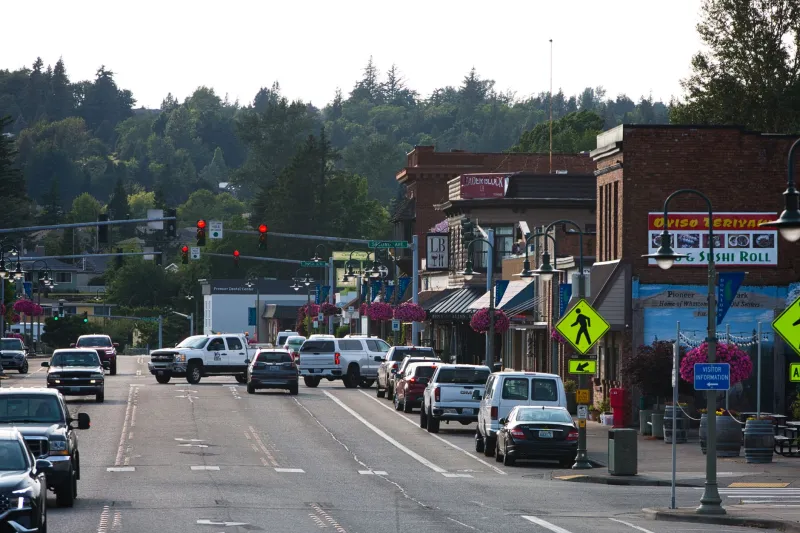
Something has shifted in the American homebuyer's calculus. Square footage, which dominated residential wish lists for the better part of three decades, has yielded ground to a different set of priorities—ones that center on place, connection, and the daily texture of neighborhood life. The homes that are capturing the most sustained interest are not necessarily the largest or the newest. They are the ones embedded in communities where life can actually be lived on foot.
This is not a fringe preference. It is a measurable market trend, and it carries real implications for how residential real estate is valued, marketed, and experienced across the United States.
The Commute That Changed Everything
The pandemic-era shift to remote and hybrid work arrangements did more than alter the daily schedule of millions of Americans. It fundamentally changed the relationship between a person and their home. When the office commute disappeared, the home itself became the center of gravity for daily life—and the neighborhood surrounding it became, by extension, far more consequential.
Buyers who had previously been willing to accept a long commute in exchange for a larger home in a more distant suburb found themselves reconsidering that bargain. When you are home most of the day, the quality of your immediate surroundings matters in ways that a weekend-only lifestyle never quite revealed. The coffee shop two blocks away is no longer a luxury amenity. It is, for many remote workers, a functional extension of the home office.
This recalibration has elevated the desirability of established neighborhoods—places with existing commercial infrastructure, mature green space, and the kind of pedestrian-scaled street life that cannot be built overnight. Avenues like Cline, which have sustained community-serving businesses and walkable blocks across multiple decades, find themselves newly relevant in a market that has rediscovered their virtues.
Walkability as a Financial Asset
It is worth being direct about the economic dimension of this shift. Walkability is no longer merely a lifestyle preference—it is a quantifiable component of property value. Research published by the American Planning Association and corroborated by multiple independent analyses has demonstrated that homes in highly walkable neighborhoods command measurable premiums over comparable properties in car-dependent areas. In some markets, that premium has been documented at 20 to 30 percent.
The Walk Score metric, imperfect as any single index must be, has been adopted by major real estate platforms precisely because it correlates with buyer behavior in demonstrable ways. Listings that score well on walkability measures generate more inquiries, receive offers more quickly, and tend to hold their value more consistently through market cycles than those that do not.
For buyers who view a home purchase as both a lifestyle decision and a long-term financial commitment, this is not an incidental consideration. It is a core investment thesis.
The Authenticity Premium
There is a cultural dimension to this conversation that deserves honest attention. American consumers—across a wide range of industries—have grown increasingly skeptical of manufactured experiences. The same buyer who prefers a local restaurant over a national chain, or an independent bookstore over a big-box retailer, often brings that same sensibility to the residential market.
New developments that attempt to simulate neighborhood character through architectural theming and curated retail tenants face an inherent credibility problem. A neighborhood that has been lived in for fifty or seventy years possesses something that no amount of design intent can replicate: a genuine history. The corner building that has housed a pharmacy, a hardware store, and now a wine bar carries with it a layered identity that buyers find compelling precisely because it was not planned.
Established avenues like Cline Avenue offer this authenticity as a matter of course. The neighborhood's character was not assembled from a developer's vision board. It emerged from decades of community life, and that emergence is visible in everything from the scale of the street to the character of the local institutions that anchor it.
What Families Are Actually Looking For
Conversations with buyers who are drawn to walkable, community-centered neighborhoods reveal a consistent set of priorities that transcend demographic categories. Young families cite the ability to walk children to school and to local parks as a meaningful quality-of-life factor. Empty nesters describe a desire to reduce automobile dependence without sacrificing access to the services and social infrastructure that make daily life enjoyable. Remote workers consistently mention the importance of having third places—coffee shops, libraries, neighborhood gathering spots—that provide structure and social contact outside the home.
These are not niche preferences. They represent a broad reorientation toward a style of living that American residential development largely abandoned in the postwar push toward automobile-centric sprawl—and that a growing segment of the market is now actively seeking to reclaim.
The Case for Established Avenues
At 124 Cline Avenue, our perspective on this shift is informed by direct experience with buyers who articulate exactly these priorities. The homes we represent are not simply structures on a lot. They are entry points into a neighborhood ecosystem—one that offers proximity to local amenities, a walkable street environment, and the kind of community character that accumulates over time rather than being installed by a developer.
The argument for investing in a home on an established avenue is, at its core, an argument for a particular vision of residential life. It holds that where you live is inseparable from how you live. That the street outside your front door is as important as the rooms within. That a neighborhood which has earned its identity over decades offers something that newer alternatives, however well-designed, cannot yet claim.
That argument is resonating with today's buyers in ways that are reshaping residential markets across the country. The streets that got it right the first time are, increasingly, the streets that the market is rewarding most generously. On Cline Avenue, that is precisely the kind of value we have always believed in.