Exposed on All Sides: The Hidden Costs and Overlooked Drawbacks of Buying a Corner Lot Home
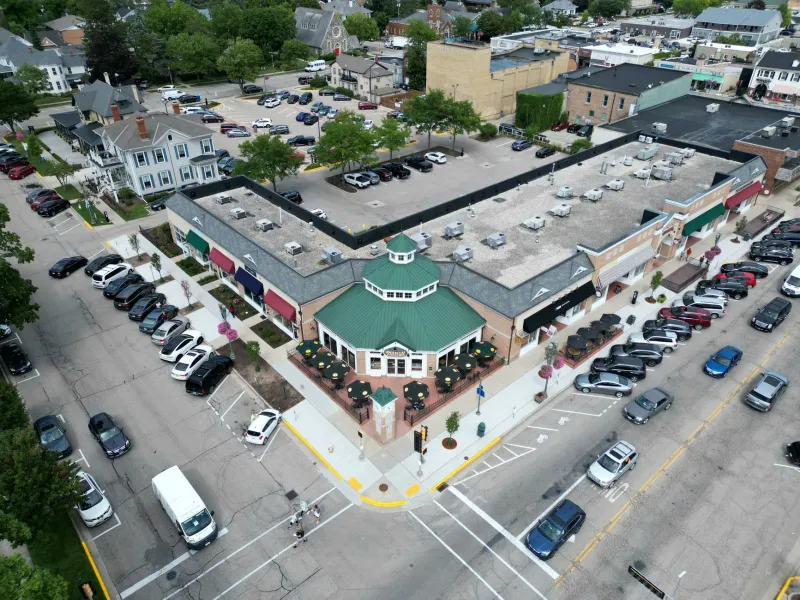
There is something visually compelling about a corner lot home. It sits at the intersection of two streets, commanding sightlines in multiple directions, flanked by open space where neighboring fences would otherwise crowd in. Drive through any established American neighborhood—whether a tree-lined block in the Midwest or a sun-baked subdivision in the Southwest—and the corner property tends to catch the eye first.
But eye-catching and financially sound are not always the same thing.
For buyers navigating today's competitive residential market, the corner lot question deserves more scrutiny than it typically receives. The assumption that greater visibility translates to greater value is, at best, an oversimplification. At worst, it leads buyers to overpay for a property that introduces a set of complications their mid-block neighbors will never encounter.
The Premium That Sellers Love to Cite
Corner lots have historically commanded a price premium ranging from roughly 1 to 10 percent above comparable mid-block properties, depending on the market and the specific neighborhood. In denser urban settings, that premium can occasionally climb higher, particularly when the extra lot width or depth creates meaningful additional outdoor space.
Sellers and their agents are quick to point to this premium as evidence of inherent value. And in some cases, they are not wrong. A well-maintained corner property with mature landscaping, a double driveway, and a wraparound porch can represent a genuinely superior purchase—provided the buyer understands what they are actually acquiring.
The problem arises when the premium is treated as self-justifying. A higher list price does not automatically mean a stronger long-term investment. Several structural factors specific to corner lots work against appreciation over time, and they rarely appear in the listing description.
Traffic, Noise, and the Price of Exposure
The most immediate trade-off for corner lot owners is increased traffic exposure. A mid-block home faces one street. A corner home faces two—and sits at the point where vehicles turning, accelerating, and occasionally misjudging their approach are concentrated. In residential neighborhoods with moderate through-traffic, this is a manageable inconvenience. On busier collector streets, it can become a meaningful quality-of-life issue.
Noise follows traffic. Studies on residential noise pollution consistently show that proximity to intersections elevates ambient sound levels, even in neighborhoods that would otherwise qualify as quiet. For families with young children, or for buyers who prioritize outdoor living, this distinction matters considerably.
There is also the matter of headlights. Corner homes—particularly those on streets with moderate nighttime traffic—experience more frequent light intrusion into ground-floor windows and bedrooms than their mid-block counterparts. It is a detail that rarely surfaces during a daytime showing but becomes apparent within the first week of occupancy.
The Lawn You Did Not Budget For
Corner lots typically carry more linear footage of sidewalk and street-facing yard than mid-block properties. In most American municipalities, homeowners are responsible for maintaining the sidewalk adjacent to their property—including snow removal in northern climates and routine upkeep year-round. A corner lot owner may be responsible for twice the sidewalk footage of a neighbor situated in the middle of the block.
Landscaping costs follow the same logic. More street-facing perimeter means more grass to cut, more shrubs to trim, and more irrigation to maintain. For buyers who enjoy yard work, this may be a non-issue. For those purchasing with an eye toward low-maintenance living, the corner lot's visual openness carries a recurring cost that should be factored into the annual budget.
Property Taxes and Insurance: The Numbers Behind the Curb Appeal
In many jurisdictions, the larger lot size associated with corner properties results in a modestly higher assessed value—and therefore a modestly higher annual property tax bill. The difference may be measured in hundreds of dollars per year rather than thousands, but over a ten- or twenty-year ownership horizon, it accumulates.
Homeowners insurance introduces a related consideration. Corner lots face statistically higher exposure to vehicle intrusion events—instances where a car leaves the roadway and contacts the property. Insurance actuaries account for this. Depending on the insurer and the specific location, corner lot homeowners may pay slightly elevated premiums to reflect this elevated risk profile. It is worth requesting a quote specific to the address before closing, rather than assuming the rate will mirror what a neighbor on the same block pays.
Privacy: The Underrated Factor in Long-Term Satisfaction
Real estate professionals who work with repeat buyers frequently observe that privacy becomes a more significant priority with each successive purchase. First-time buyers often underestimate how much they will come to value a yard that feels enclosed and sheltered. Corner lots, by definition, offer less of this.
With two street-facing exposures, corner lot owners typically have fewer options for creating private outdoor spaces without significant landscaping investment. Fencing regulations—which vary by municipality but often restrict fence height along street-facing perimeters—can further limit what a homeowner can realistically do to reclaim a sense of seclusion.
This is not a dealbreaker for every buyer. But it is a factor that tends to matter more over time than it does during an initial walkthrough.
When the Corner Lot Does Make Sense
None of this is to suggest that corner lots are categorically poor investments. In the right circumstances, they represent a genuinely attractive option.
Buyers who prioritize lot size and outdoor space in markets where interior lots are uniformly compact may find the corner premium entirely justified. Homeowners who intend to add an accessory dwelling unit, a detached garage, or a significant addition will often find that corner lots provide the buildable square footage that mid-block properties simply cannot offer. And in neighborhoods where foot traffic is light and street activity is minimal, the noise and exposure concerns diminish considerably.
The key is approaching the decision with clear eyes rather than allowing curb appeal to substitute for analysis. A corner lot on a quiet residential street in an established neighborhood—one where traffic volumes are low and the intersection sees minimal activity—presents a very different risk profile than a corner lot at the convergence of two collector roads.
The Question Every Buyer Should Ask
Before accepting the corner lot premium as a given, prospective buyers should conduct a straightforward comparison: identify two or three mid-block sales in the same neighborhood over the past three to five years, then examine how corner lot sales in the same period performed at resale. In many markets, the appreciation gap between corner and mid-block homes is narrower than the initial price differential suggests—meaning buyers who paid the premium did not recover it proportionally at sale.
At 124 Cline Avenue, the view of residential value has always been rooted in the specifics of place. A street address is not just a location—it is a set of conditions that shape daily life and long-term financial outcomes. The corner lot question is a useful reminder that in real estate, as in most things, what stands out from a distance deserves a closer look before you sign on the dotted line.