What Your Street Is Really Worth: The Hidden Valuation Premium Built Into Neighborhood Identity
The Number Behind the Name
When a prospective buyer steps out of a car and onto a residential street for the first time, something immediate and largely instinctive happens. Before they've examined a single room or reviewed a single disclosure document, they are already forming a valuation. That valuation is not arbitrary. It is informed by decades of accumulated real estate data suggesting that street-level identity—the sum of a block's physical character, commercial proximity, and social cohesion—can account for a resale premium that, in certain well-documented markets, approaches or exceeds fifteen percent.
For homeowners and prospective buyers alike, understanding that premium is not merely academic. It is the difference between a sound long-term investment and a property that underperforms the broader market for reasons that have nothing to do with the house itself.
What Appraisers Are Actually Measuring
Licensed appraisers in the United States are required to consider what the industry calls "location adjustments" when producing a Uniform Residential Appraisal Report. In practice, this means that two structurally identical homes—same square footage, same year of construction, same bedroom and bathroom count—can carry meaningfully different appraised values based on the specific street on which they sit.
According to conversations with residential appraisers working across mid-sized American metros, the factors that most consistently justify upward location adjustments include:
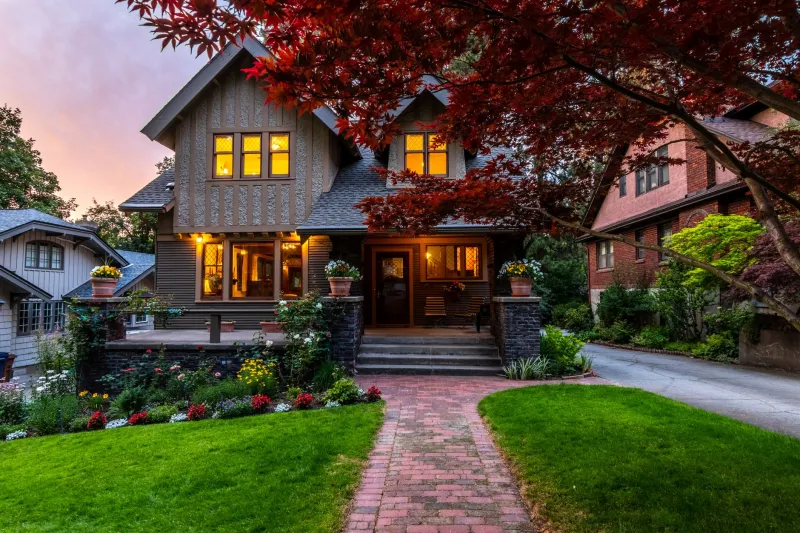
- Architectural consistency along the streetscape. Blocks where homes share a recognizable design vocabulary—whether Colonial Revival, Craftsman bungalow, or mid-century ranch—tend to appraise higher than those with a fragmented mix of styles and renovation vintages. Cohesion signals stability.
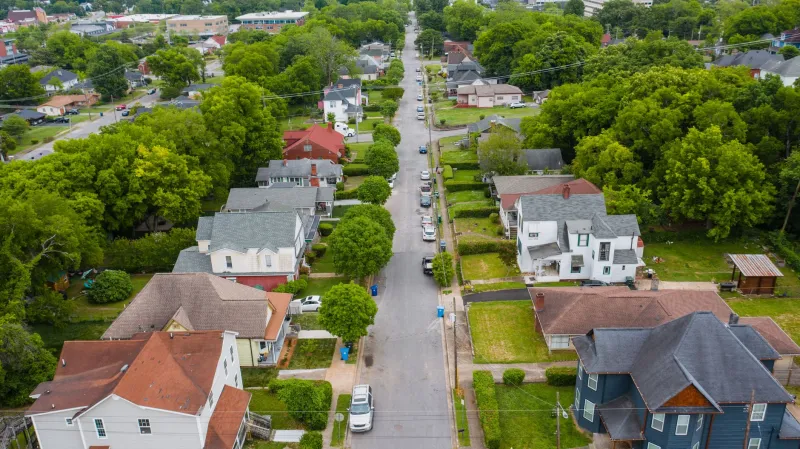
- Tree canopy and maintained landscaping. Mature street trees are not merely aesthetic. Studies conducted by the USDA Forest Service have linked tree-lined residential streets to property value increases ranging from three to fifteen percent, depending on canopy density and species health.
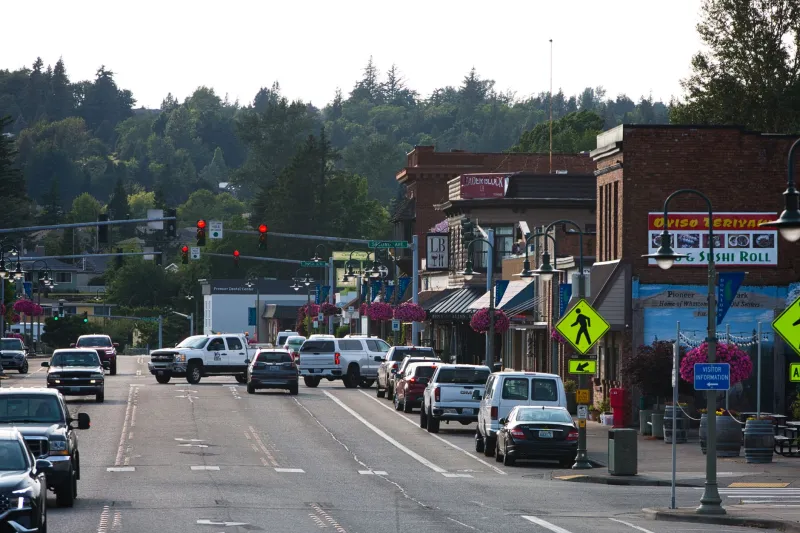
- Proximity to walkable commercial nodes. Streets within a quarter-mile of independently owned retail, coffee shops, or neighborhood restaurants consistently outperform comparable streets in purely residential corridors. Buyers are paying, in part, for the lifestyle implied by proximity.
- Low traffic volume with high connectivity. The paradox of the desirable residential street is that it must feel quiet while remaining genuinely accessible. Cul-de-sacs can underperform in this metric; through streets with traffic-calming infrastructure tend to strike the right balance.
Comparable Sales Tell the Story
The most persuasive evidence for what might be called a "street premium" comes not from appraisal theory but from comparative market analysis. When real estate professionals pull comparable sales—the backbone of any pricing strategy—they frequently observe clustering patterns that align precisely with street identity.
In neighborhoods across the Midwest and mid-Atlantic, blocks with a clear sense of place and historical continuity routinely command sale prices four to eighteen percent above adjacent streets with equivalent housing stock. The divergence is particularly pronounced in markets where inventory is tight and buyers have the luxury of being selective. When a buyer can choose between two similar homes at similar price points, the one on the street with the stronger identity—the one that feels like somewhere—wins the offer.
This is not a soft or sentimental observation. It is a pattern that repeats across markets, across price points, and across decades of transaction data.
The Community Factor That Comps Cannot Fully Capture
There is a dimension of street value that resists easy quantification but is nonetheless real. It is the social infrastructure of the block: the neighbors who know each other's names, the informal watch networks, the annual gatherings that reinforce a shared investment in the street's character. These elements do not appear on an MLS listing, but experienced buyers sense them immediately.
Research published in journals focused on urban planning and residential sociology consistently finds that perceived community cohesion correlates with both higher sale prices and faster time-to-close. Buyers are not simply purchasing a structure; they are purchasing an entry point into a social environment. Streets that have cultivated that environment—whether through decades of stable ownership, active neighborhood associations, or simply the accumulated goodwill of long-term residents—carry an intangible premium that ultimately becomes very tangible at the closing table.
For sellers, this means that the investment in community participation—showing up to block meetings, maintaining the exterior of your property with care, engaging with neighbors—is not merely civic virtue. It is a financial strategy.
Architectural Integrity as a Long-Term Asset
One of the most consistent findings in residential real estate analysis is that streets which have resisted the pressure to over-renovate—where homeowners have updated interiors while preserving exterior architectural character—outperform streets where individual homes have been dramatically altered in ways that disrupt the visual rhythm of the block.
This presents a nuanced challenge for homeowners considering improvements. The renovation that maximizes your individual home's appeal may, if it breaks from the street's established character, actually suppress the broader valuation environment that benefits every property on the block. The most sophisticated homeowners understand this dynamic and make decisions accordingly. They are investing not just in their own structure but in the shared asset that is the street itself.
What This Means for Buyers Entering the Market Today
For buyers currently evaluating properties, the practical implication is clear: street-level due diligence deserves the same rigor as home inspection and title review. Before committing to a purchase, prospective buyers should examine the following:
- The trajectory of neighboring properties. Are homes on the street being maintained, renovated thoughtfully, or allowed to decline? The direction of investment on a block is often more predictive than its current condition.
- The commercial and institutional anchors nearby. A well-regarded elementary school, a long-established neighborhood business, or a maintained public park within walking distance are reliable indicators of sustained demand.
- The ownership tenure of existing residents. Streets where homeowners stay for ten, fifteen, or twenty years tend to develop the kind of identity that commands a resale premium. High turnover can signal the opposite.
- Municipal investment patterns. Recent infrastructure improvements—repaved roads, new sidewalks, updated streetlighting—often precede broader appreciation. Local government capital spending is a leading indicator worth tracking.
The Street as Investment Thesis
At 124 Cline Avenue, we return often to a foundational conviction: that the address you choose is not merely a location. It is an argument about the kind of investment you are making, the community you are joining, and the long-term trajectory of your financial position as a homeowner.
The data supporting a street-level premium is not new, but it is increasingly well-documented, and it is growing more relevant as American buyers—particularly those in the millennial and Gen X cohorts now entering their peak homebuying years—prioritize place-based identity over raw square footage. These buyers are not simply looking for a house. They are looking for a street, a neighborhood, a sense of belonging to somewhere specific.
Streets that can deliver that—streets with architectural integrity, community investment, walkable amenities, and a legible identity—are not merely pleasant places to live. They are, by any rigorous measure, superior long-term investments. The fifteen percent premium is not a marketing figure. It is a reflection of what people will reliably pay, again and again, for the experience of living somewhere that feels genuinely like home.