Measuring What You Actually Own: How Lot Dimensions Drive Property Value Far Beyond the House Itself
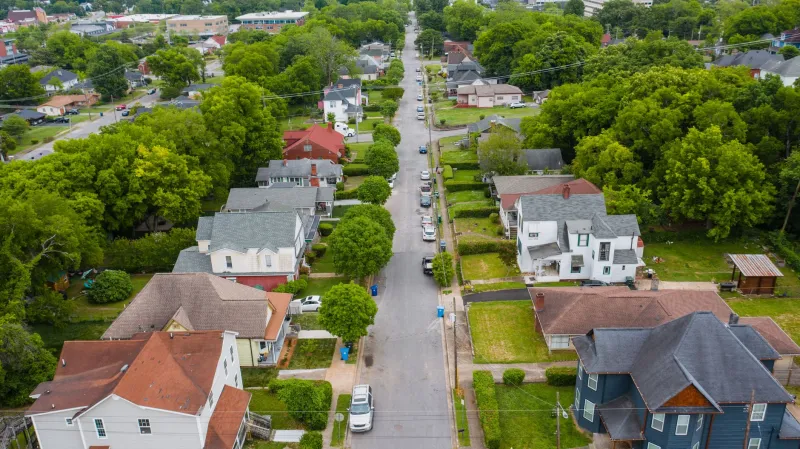
When a buyer walks through a home on a street like Cline Avenue, the instinct is to count bedrooms, inspect the kitchen countertops, and note the condition of the roof. These are reasonable concerns. But experienced buyers—and virtually every seasoned appraiser—will tell you that the land itself is often the more consequential variable in a property's long-term value. The house can be renovated. The lot cannot be expanded.
Understanding how lot dimensions translate into dollars is not a skill reserved for developers or commercial investors. It is foundational knowledge for any homebuyer who wants to understand what they are actually purchasing—and whether they are paying a fair price for it.
Frontage: The Number Most Buyers Overlook
Frontage refers to the width of a lot as measured along the street. It is, in many respects, the most influential single dimension of a residential parcel. A wide frontage creates visual presence, allows for a broader setback, and often signals greater development potential under local zoning codes.
In established residential neighborhoods, frontage premiums are well-documented. A lot measuring 75 feet wide on a tree-lined street will typically command a meaningfully higher price per square foot than a comparably sized lot measuring only 40 feet wide—even if the total acreage is similar, achieved through additional depth rather than width. Why? Because frontage is what neighbors and passersby see. It determines curb appeal, driveway options, and the sense of spaciousness that photographs cannot always capture.
Real estate professionals in many markets apply what is informally called the "4-3-2-1 rule" when valuing land depth relative to frontage. Under this framework, the first quarter of lot depth from the street accounts for approximately 40 percent of the land's value, the second quarter accounts for 30 percent, the third for 20 percent, and the rear quarter for just 10 percent. While this heuristic varies by market and context, it illustrates a consistent principle: proximity to the street carries disproportionate value.
Depth, Usability, and the Practical Limits of a Long Lot
Depth is the measurement from the front property line to the rear. A deep lot sounds appealing—more yard, more privacy, more room for a garden or a pool. And in many cases, it genuinely is. But depth alone does not guarantee usability.
Local zoning regulations impose setback requirements on all sides of a parcel: front, rear, and both sides. A lot that appears generous on paper may yield a surprisingly constrained buildable envelope once setbacks are applied. A buyer considering a lot 200 feet deep should verify how much of that depth is actually usable under the applicable zoning ordinance, and whether any portion falls within a flood zone, easement, or utility corridor.
Furthermore, extreme depth without sufficient width can create awkward proportions. A lot that is 30 feet wide and 180 feet deep may technically offer more total square footage than a 60-by-90-foot parcel, but its narrow frontage limits architectural options, reduces curb appeal, and can complicate resale.
Calculating True Land Value: A Practical Framework
For buyers who want to move beyond surface-level comparisons, a straightforward approach involves separating the value of the land from the value of the structure.
Begin by identifying recent sales of vacant lots in the same neighborhood, or sales of homes that were subsequently demolished and redeveloped. These transactions, when available through your county assessor's records or a licensed real estate agent with MLS access, provide the clearest signal of what the land itself is worth.
If vacant lot sales are scarce—as they often are in mature neighborhoods—look at paired sales: two homes of similar construction and condition on the same street, one with a wider lot and one with a narrower lot. The price difference, adjusted for any structural improvements, approximates the market's implicit frontage premium.
You can also reference your local tax assessor's records, which in most jurisdictions separately assess land and improvements. While assessed values frequently lag behind market values, the ratio between land and improvement value can reveal how much of the purchase price is attributable to the parcel itself.
Lot Shape and Its Quiet Influence on Price
Beyond the headline dimensions of frontage and depth, lot shape introduces additional complexity. Rectangular lots are the simplest to value and the easiest to build on. Irregular lots—those with angled boundaries, pie-shaped configurations, or notched corners—require more careful analysis.
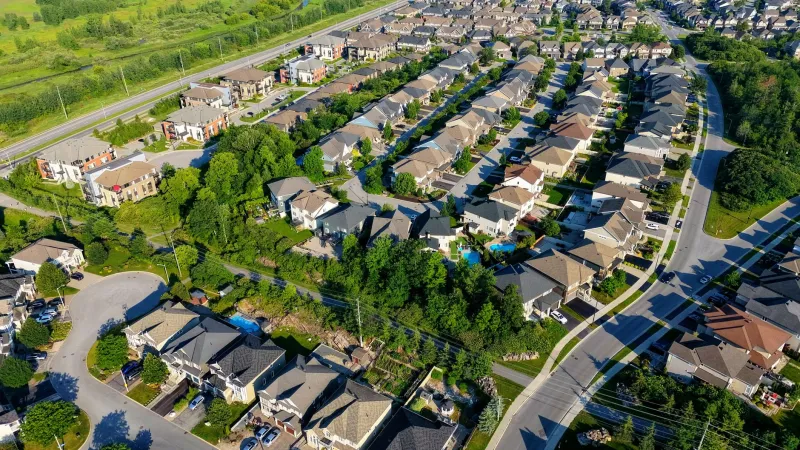
Pie-shaped lots, which widen toward the rear, are common in cul-de-sac developments and can offer generous backyard space despite modest frontage. Flag lots, which connect to the street via a narrow access strip, may offer privacy but often carry a discount due to limited visibility and potential access complications.
Corner lots present their own set of trade-offs. They offer dual frontage, which can enhance visibility and curb presence, but they also typically reduce usable yard space due to additional setback requirements on both street-facing sides. The valuation of a corner lot is genuinely context-dependent: in some neighborhoods they command a premium; in others, buyers prefer the privacy of an interior lot.
What Lot Size Signals About Neighborhood Character
Beyond individual property valuation, lot dimensions collectively define the character of a street. Neighborhoods where homes sit on generous parcels—with broad setbacks, mature landscaping, and clear separation between structures—tend to preserve a sense of scale and permanence that denser development cannot replicate.
This is not merely an aesthetic observation. Research on residential property values consistently identifies lot coverage ratios—the percentage of a parcel occupied by structures—as a meaningful predictor of both price and price stability. Homes on lots where coverage is modest, leaving room for trees, gardens, and open space, tend to hold value more reliably through market cycles than those on maximally developed parcels with little remaining land.
For buyers evaluating a home on an established residential street, it is worth asking not only what the lot dimensions are, but what the prevailing lot sizes are throughout the neighborhood. A home on a 50-foot-wide lot may be entirely appropriate where that is the neighborhood norm. But if surrounding parcels average 80 feet of frontage, that same home may carry a subtle discount—one that the listing price does not always reflect.
The Land Beneath the Listing
Every property listing advertises a home. But what you are ultimately purchasing is a parcel of land on which a home happens to exist. The land is permanent; the structure is not. Improvements depreciate. Land, in a well-maintained neighborhood with sound fundamentals, tends to appreciate.
Approaching a purchase with this perspective does not require abandoning the practical concerns of daily living—the school district, the commute, the condition of the kitchen. It simply means adding one more layer of analysis: understanding the dimensions of what you own, what those dimensions are worth relative to comparable parcels, and how the geometry of the lot will shape your use of the property for years to come.
On a street like Cline Avenue, where the character of the neighborhood is written as much in its lots and setbacks as in its architecture, that analysis is not optional. It is the foundation of a sound purchase.