Small Fixtures, Loud Signals: What Mailboxes Reveal About the Streets We Choose to Call Home
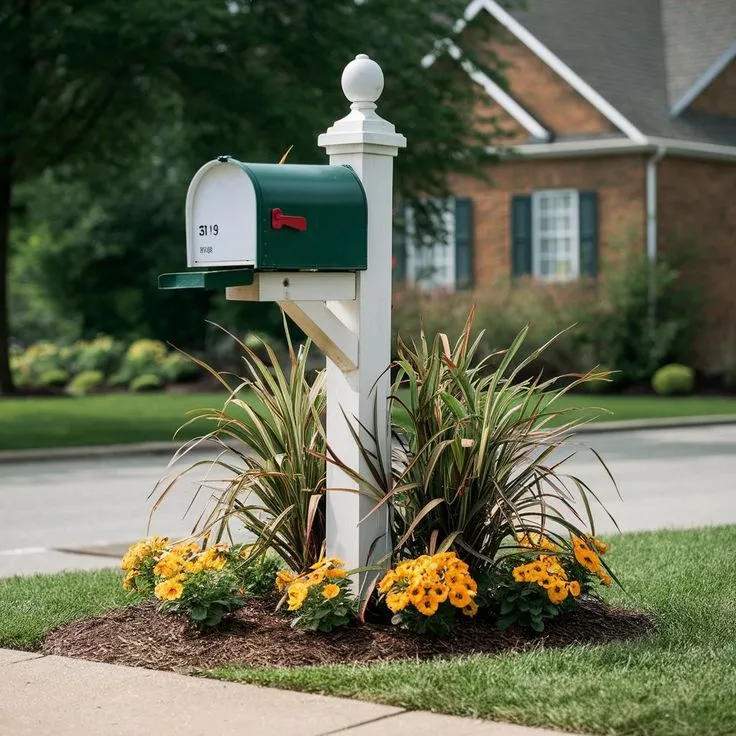
Photo: residential mailbox curb appeal suburban street front yard, via i.pinimg.com
There is a moment, familiar to anyone who has driven slowly through an unfamiliar neighborhood while house hunting, when the street itself begins to speak. The language it uses is not dramatic. It does not announce itself through grand architecture or sweeping landscaping. Instead, it communicates through accumulation—through the sum of small, seemingly trivial details that line the road on both sides. Among the most telling of those details is one that most buyers consciously register only in passing: the mailbox.
It sounds almost absurd to suggest that a postal fixture could influence a purchasing decision involving hundreds of thousands of dollars. Yet experienced real estate agents, appraisers, and behavioral researchers consistently point to exactly this kind of peripheral detail as a reliable indicator of neighborhood character. The mailbox, humble as it is, carries information that the rational mind may overlook but the intuitive mind absorbs immediately.
The Psychology of First Impressions on a Residential Street
When buyers evaluate a neighborhood, they are not conducting a clinical audit. They are forming a feeling—a composite sense of whether a place is cared for, stable, and worth the commitment of a long-term investment. That feeling is assembled from dozens of micro-observations made in seconds, and research in environmental psychology suggests that maintenance signals are weighted heavily in that process.
A mailbox in good repair—properly aligned, freshly painted or cleanly finished, free of rust and dents, with visible house numbers that are legible and intact—communicates something specific about the household behind it. It suggests that the resident attends to their property, that they regard the street-facing portion of their home as a shared space deserving of care. Multiply that signal across six, eight, or ten consecutive properties on a single block, and the cumulative effect becomes something appraisers describe informally as "street pride."
Conversely, a row of weathered posts, faded plastic boxes with missing doors, or numbers so corroded they can no longer be read at a glance tells a different story. It does not necessarily indicate neglect within the home itself, but it creates an impression that the public-facing threshold between private property and shared street has been allowed to deteriorate. Buyers internalize this, often without articulating it, as a question about long-term value stability.
What Real Estate Professionals Actually Notice
Ask a seasoned listing agent what they observe during a pre-market walkthrough, and the conversation will eventually reach the front yard. Most will confirm that the mailbox is one of several exterior checkpoints they evaluate—not because postal hardware is intrinsically valuable, but because it functions as a proxy for the owner's broader relationship with their property.
Appraisers, whose methodology is more formalized, work within frameworks that assess curb appeal as a contributing factor to value. While no appraisal form includes a dedicated line for mailbox condition, the broader category of exterior maintenance—which encompasses everything visible from the street—absolutely does. A property surrounded by neighbors who maintain even the smallest exterior details will tend to support stronger comparable sales, which in turn supports a higher appraised value for every home on the block.
There is also a practical dimension that agents emphasize: listing photographs. In an era when the majority of home searches begin online, the exterior shot of a property is often the first image a prospective buyer sees. A rusted or tilting mailbox in the foreground of that photograph introduces visual clutter and an immediate, if subconscious, note of disorder. It is a minor distraction that costs nothing to correct but, left unaddressed, can quietly diminish the perceived quality of an otherwise attractive listing.
Placement, Style, and the Unspoken Grammar of the Streetscape
Beyond condition, the style and placement of mailboxes contribute to what urban designers call the rhythm of a street. On well-maintained residential avenues, there is often a visual consistency—not uniformity, but a shared sensibility—in how homeowners present their properties at the curb. Mailboxes that are thoughtfully chosen to complement the architectural character of a home, positioned at a consistent height and setback from the road, and maintained to the same standard as other exterior elements contribute to that rhythm.
This does not mean every household must install an expensive custom fixture. A simple, clean, well-mounted standard mailbox with clear house numbers performs its role admirably. What disrupts the streetscape is not modesty of design but inconsistency of care—a listing post planted at an angle, a box that has shifted off-center after years of minor impacts, numbers that have faded into illegibility. These are details that require perhaps an afternoon and a modest expenditure to correct, yet their absence communicates a message that lingers in a buyer's impression long after the showing has concluded.
Practical Guidance for Sellers and Attentive Buyers
For homeowners preparing to list a property, the mailbox presents one of the highest return-on-investment improvements available. The cost of replacing or refurbishing a standard residential mailbox is low—often between thirty and one hundred fifty dollars for materials, depending on the style selected—and the visual improvement can be immediate and meaningful. Sellers should ensure that house numbers are bold, legible from the street, and consistent in font with any other exterior signage on the property.
For buyers conducting due diligence on a neighborhood, the mailboxes along a prospective street are worth a deliberate second look. A block where the majority of properties display well-maintained fixtures signals a community that takes collective ownership of its public presentation seriously. That collective attitude tends to correlate with other positive indicators: active homeowners associations or informal neighborhood networks, consistent property maintenance across multiple households, and a general resistance to the kind of gradual visual decline that can precede broader value erosion.
At 124 Cline Avenue, we regard this kind of granular observation as essential to informed homebuying. The difference between a street that holds its value and one that slowly loses it is rarely a single dramatic factor. It is, more often, the accumulated weight of small decisions made consistently over time—decisions about what to maintain, what to repair, and what message to send to every person who drives or walks past.
The Larger Lesson in a Small Detail
The mailbox is not, in isolation, a determinative factor in a real estate transaction. No buyer has ever declined to purchase a home they loved because of a dented postal box at the curb. But the mailbox is representative of a broader principle that experienced buyers and agents understand well: the details that seem too small to matter are often the ones that, in aggregate, define the character of a street.
A neighborhood is not merely a collection of structures. It is a shared environment that its residents maintain, consciously or not, through thousands of small choices. The condition of the mailbox at the edge of the lawn is one of those choices—a quiet declaration of how a homeowner relates to their property, their street, and the community they share with their neighbors. For buyers who know how to read it, that declaration is worth paying attention to.